Description
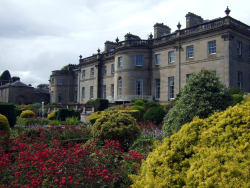
Paxton House is a magnificent Georgian country house set in beautiful parkland near Berwick-upon-Tweed. Built in the 18th century, it offers visitors a glimpse into elegant historic living, combined with fine art and scenic riverside walks. It’s a peaceful and cultural day out for families, couples and history lovers.
Inside, visitors can explore grand rooms filled with period furniture, decorative plasterwork and one of Scotland’s most important collections of paintings, including works from the National Galleries of Scotland. Outside, the estate features riverside walks along the River Tweed, landscaped gardens, woodland trails and a children’s play area. Seasonal events, exhibitions and family activities are held throughout the year, making every visit a little different.
Admission prices are £12 for adults, £10 for concessions and £6 for children, with family tickets available for £30. Grounds-only tickets are available at a lower rate, and special event pricing may vary depending on the programme.
With its combination of history, art and natural beauty, Paxton House offers a relaxing yet enriching experience. Whether you’re admiring fine paintings, strolling through the gardens or enjoying a family picnic by the river, it’s a charming heritage destination worth visiting.
Features
- Paid
- Host birthday parties: Yes
Features
A house of treasures
- Only the best: Paxton House is home to two pre-eminent nationally important collections of furniture. The first commissioned from England’s most celebrated cabinetmaker, Thomas Chippendale and his son, by Ninian Home from 1774-91, and the second, commissioned from Scotland’s premier cabinetmaker, William Trotter, by George Home and Nancy Stephens in the Regency period. Today you can see the original furniture in the rooms for which it was designed.
- Thomas Chippendale: Ninian Home commissioned Chippendale, Haig and Co. to decorate and furnish his home ‘in a neat but not expensive manner’ between 1774- 1791. Thomas Chippendale and his prestigious firm of cabinet makers, Chippendale, Haig and Co, furnished the house with a wide variety of exquisitely made chairs, cabinets, desks, beds, clothes presses, tables as well as soft furnishings at a time when he and his son were at the height of their success.
- William Trotter: William Trotter is Scotland’s most outstanding cabinetmaker of all time. A crucial figure in the Edinburgh New Town, he had showrooms on Princes Street. His furniture was typically made to be hired out to clients renting houses in the New Town of Edinburgh. Paxton was Trotter’s largest country house commission with 40 fully documented pieces made for the new wing added by George Home in 1812-15, of which 30 remain in situ. His furniture at Paxton, mostly in rosewood, is the world’s largest publicly accessible collection of his work.
- Grand Tour collection: Patrick Home, the builder of Paxton, was sent abroad in 1748, shortly after the Jacobite Uprising, by his mother at the age of 20 to broaden his education. After university in Leipzig, he headed for Berlin and later for Italy and France, particularly Paris. This fashionable adventure for young men was known as the Grand Tour, a bit like a modern gap year. Patrick undertook travels in Europe again, especially in the 1770s. While travelling Patrick acquired a large number of paintings, marbles, and souvenirs including an outstanding 16th century ebony and bone cabinet made in Naples for the Albertoni family.
- The Picture Gallery: The opulent Picture Gallery is filled with a superb collection of paintings on loan from the National Galleries of Scotland. Works by celebrated 18th and 19th century Scottish artists Sir Henry Raeburn, William McTaggart and Sir William Allan can be enjoyed alongside 20th century paintings by the renowned Scottish colourists Samuel John Peploe and George Leslie Hunter, and artists with local connections to the Borders, Anne Redpath and Sir William Gillies.
- Patrick Home's Wardrobe: Paxton House is also home to a world class collection of nearly 400 items of historic costume. The core of the collection is 18th century men’s costume, much of it found locked in a trunk 240 years after Patrick Home returned from abroad. These clothes were worn when he was a favourite of the court of Frederick the Great of Prussia between 1749-1751. In these stunning outfits he courted his great love, Sophie de Brandt and took part in daily life at the King’s palaces.
- Library: Patrick Home, who commissioned Paxton House, acquired over 4000 rare, antiquarian, and 18th century books which are housed in the bookcases designed for them by William Trotter in the Library at Paxton. The Library forms an important historical collection supplemented by Patrick’s nephew, George Home and his descendants. Its titles illustrate the wide range of interests of the educated Georgian gentry.
Art & Exhibitions
- Palimpsest- Billy Gérard Frank: Paxton House’s 2025 exhibition, Palimpsest, is a powerful new body of work by Grenadian-born, New York-based artist and filmmaker Billy Gérard Frank. Running from 3rd May to 31st October, the exhibition explores the deep-rooted connections between Scotland, Grenada, and England, confronting the legacies of the transatlantic slave trade through multimedia art, community storytelling, and education. Building on Frank’s Venice Biennale work, Palimpsest reimagines hidden histories and gives voice to those long overlooked.
- Parallel Lives, Worlds Apart: Our award winning major exhibition is Parallel Lives, Worlds Apart which draws on Paxton House’s exceptional collection of historic costume to explore relationships in the lives of several owners of Paxton House in mid-18th century Scotland, Europe, Virginia and Grenada. Using original items from the collection alongside replica costume specially commissioned for the exhibition, the displays explore contrasts and connections between Paxton’s owners, their friends, descendants and the enslaved African people who worked on their sugar estates.
- Sugar & Slavery: Caribbean Connections, Slavery & Paxton explores the relationship between the Home family of Paxton House and their plantations in the West Indies where they grew sugar and nutmeg. A specially commissioned model and a unique series of watercolours, made by Scottish landscape artist Adam Callander in 1789, show the lives of the enslaved people who worked the plantations. Central to the exhibition is The Paxton Secretaire, one of the most important pieces of mahogany furniture made for plantation owner Ninian Home by Thomas Chippendale.
- Masterpieces of Scottish Painting: The Picture Gallery at Paxton is the largest private gallery ever to be built in Scotland and one of the most ambitious of any British country house. It was designed by the King’s Architect in Scotland, Robert Reid, for George Home in 1814 with the advice of Sir Henry Raeburn, Scotland’s premier portrait painter. Today we have an important loan collection of pictures from National Galleries Scotland which tell the story of Scottish painting from the 17th to the 20th centuries – portraits, land and seascapes, still lifes, romantic and avant garde paintings.
- The Ellem fishing Club: Paxton House is host to a museum dedicated to the oldest fishing club in the world. Founded in 1829, the members of the Ellem Fishing Club fish for trout in the river Whiteadder which runs into the river Tweed just east of Paxton. The museum has interactive displays where you can explore everything from the life cycle of the trout to the history of mills on the river or watch underwater footage of fish travelling upstream. Access is via the Gift Shop.
House Tour
- The Entrance Hall: The only room with an interior completed by Patrick Home in the 1760s, the perfectly symmetrical Entrance Hall is a light filled space decorated with lively Rococo plasterwork by George Morrison. It was always sparsely furnished with a painted oilcloth on the floor.
- The Morning Room: The Morning Room was originally the family’s private sitting room or parlour, redecorated in the Regency around 1817 by George Home. Today it is home to The Paxton Secretaire, one of the finest examples of Chippendale’s ‘Paxton Style’ and now featured in a fascinating new exhibition – Sugar & Slavery – which explores the family’s links with slavery and their plantations in Grenada.
- The Drawing Room: The pinks and greens of the Drawing Room create a light and feminine space using classical motifs, echoed in the inlay of the furniture. Here the furniture is of Chippendale’s best quality.
- The Dining Room: The Dining Room was the principal entertaining room of the house and has the finest interior, decorated with panache by Thomas Chippendale. On the walls hang some of the paintings collected by Patrick Home in Italy in the 1770s.
- Costume: When Patrick Home sold Paxton to his cousin Ninian, he left behind a chest of clothing worn at the courts of Europe in the 1740s, including the costume he had worn as a Carthaginian knight at the 1750 Berlin Carousel, a famous spectacle staged at the court of Frederick the Great of Prussia. Patrick’s high fashion outfits now form the core of an important collection of historic costume at Paxton House.
- The Library: The room was created for George Home around 1811 and is reached by a Bust Room designed to show off Patrick Home’s sculpture collection. The style is Regency and the atmosphere masculine, with furnishings in rosewood by George Trotter.
- Picture Gallery: The top lit Picture Gallery was added by George Home to display his uncle’s picture collection, now augmented by works on loan from the National Gallery of Scotland. The room contains exceptional suites of furniture by Scotland’s premier cabinetmaker, George Trotter.
- The Main Staircase: The main staircase is decorated with rococo plasterwork with a delicately worked wrought iron balustrade. Designed to take family and guests from the main rooms to the bedrooms, it contrasts with a simpler stair off the Morning Room used by servants.
- The West Bedroom: George Home’s bedroom in the early 19th century, with a small bathroom ensuite which may once have been a Charter Room for the safekeeping of documents.
- Alcove Bedroom: The bedroom is furnished with simple elegant pieces in mahogany by Thomas Chippendale decorated with wallpaper to reproduce that described in Chippendale’s accounts. There is a small powder room off.
- Principal Bedroom: The main bedroom at Paxton, decorated in newly fashionable chintz, has some of the most interesting Chippendale furniture in the house including a set of painted wheelback chairs.
- The Kitchen: The Georgian kitchen is separate from the house in the West Wing as a fire precaution. See how food was cooked and prepared in the past.
Grounds & Gardens
- Woodland Gardens: Paths wind through a shady woodland garden between natural ravines while specimen trees screen and reveal the outstanding views across the river Tweed to the Cheviot Hills in Northumberland to the South. As new species of plants were introduced to Britain in the 19th century the woodland gardens were planted with varieties of rhododendrons.
- Spring Bulbs: Paxton House is famous for displays of daffodils. Lining the roads and massed at the entrance to the house, daffodils and narcissus have come to mean the arrival of Spring at Paxton House. Make a spring visit a family tradition. A varied collection of spring bulbs is also a feature of the Well Garden.
- Flower Gardens: There are two main areas of flower gardens. The flower garden terraces to the South and West of the house were introduced by George Home when pure landscape became less fashionable in the Regency. Today, colourful, well stocked herbaceous borders lead to a circular lily pond. Further down the slope is the Well Garden, developed by John Home Robertson in the 1960s with ornamental shrubs, azaleas and ferns. There is something to see in every season lovingly maintained by our team of garden volunteers.
- The Appleyard: The south facing brick wall dates from the 1760s and makes this a real sun trap. Heritage apple trees, plums and mulberries are trained up the wall and the surrounding beds are planted with soft fruits and herbs. The Appleyard garden is centred on the elegant Edinburgh Window, a favourite place for selfies.
- The Edinburgh Window: The Edinburgh Window is a single window surround rescued from the lofty Life Association of Scotland building, which once stood on Edinburgh’s Princes Street, when it was demolished over 50 years ago. It has now been rebuilt as the centrepiece of the Appleyard. It dates from 1855 when geologist David Milne-Home lived at Paxton and would have walked past it regularly on his journeys round Edinburgh. Now we can all enjoy the intricate stone carving, its cherubs, columns and swags. This striking historic garden feature is a great spot for a selfie or maybe a romantic tryst.
- Wildlife: Go quietly and you may spot some of our plentiful wildlife. We are actively encouraging habitat cover for birds, small mammals and invertebrates. The Bird and Squirrel Hide is the best place to spot some of our shy creatures. Along the river Tweed, herons, cormorants, mute swans, mallard, otters and sometimes even the occasional seal all visit the riverbanks.
- Dogs: Dogs are welcome at Paxton. There are 80 acres to explore so just make sure you keep them on the lead and pick up after them (there are regular dog poo bins). Your pooch is welcome in the Stables Tearoom, either outside in the Courtyard or inside the Harness Room (though not in the main house). You might even find something for your doggie wardrobe in the Gift Shop. And don’t forget to hashtag your social media photographs with #dogsatpaxton.
Things for Families to Do
- Woodland Playground: The Woodland Playground is tucked away between Paxton House and the river Tweed. There is something for all ages, from baby swings and a wobbly bridge to a thrilling zip wire and a super steep slide all in a shady sylvan setting, perfect for picnics. Once you’ve tasted speed among the trees with the wind in your hair on the zip wire, you’ll want to get up and do it all over again – zzzzzzhhhh.
- Paxton Playroom: Weather not ideal? We have a special room set aside to let their imagination soar. Discover our indoor playroom behind the Gift Shop in winter or in the Hayloft Gallery in summer. It is full of games, toys, dressing up,building and drawing materials so you can keep them entertained for hours.
- Garden games: Enjoy a quick round of putting or croquet on our spacious lawns. Just borrow mallets, clubs and balls from the gift shop for a fun family game from May to September. All you need is a spirit of competition!
- Den building: At Paxton, we have plenty of space to explore nature and nothing is better for kids than being outside. In the Den Building Zone, kids can get stuck in and build their own hideaway using natural materials and their own of creativity and ingenuity. Along the way they will learn a bit of co-operation and use up lots of energy. Meanwhile, tiny ones get a chance to explore the myriad different textures in nature from rustling leaves to the callous corrugated feel of bark. Follow the signs to find the Den Building Zone.
Woodland Trails
- Take a Walk: Exploring the grounds is one of the delights of Paxton House. Follow paths from the house to the flower gardens, the waterwheel or the Bird and Squirrel Hide (10 -15 mins). Or a longer one along the Linn Burn through the woods to the river Tweed, the boathouse and salmon netting station (40 mins). A little further will take you to the historic Union Chain Bridge, Britain’s first suspension bridge (45-60 mins).
- Holiday trails: School holidays and half term breaks are great times to burn off some energy at Paxton House. We run seasonal trails to celebrate Spring, Summer and Autumn. Come and explore!
- Tree Trail: The woodland garden is part of an 18th century landscape which has surrounded Paxton House since it was built in the 1750s. Some of the trees are almost as old as the house. Follow our tree trail to see some of our giants and learn a little more about our trees.
- Union Chain Bridge: Beyond Paxton, you can walk along the riverbank to the Union Chain Bridge or travel through it on one of our boat trips. When this revolutionary bridge opened in 1820 it was the longest vehicular suspension bridge in the world. The bridge used pioneering technology invented by Newcastle naval captain Samuel Brown, whose company supplied the Royal Navy with cables for a century.
Explore The River
- Boat Trips: The Paxton House boat trips are a memorable excursion for all the family to enjoy. Take a relaxing ride up the idyllic River Tweed whilst learning about the wildlife and local history from one of our friendly and knowledgeable volunteer skippers along the way. Boat trips are operated by volunteers on about 15 days each month all summer. The river is tidal at Paxton House so dates and times are set to make the most of local conditions – check our What’s On calendar for dates and times.
- The Boathouse: The Victorian Boat House has now been carefully restored from original plans and is a charming venue for private hire for up to 30 people.
The Waterwheel
- Water for the House: When John Adam designed Paxton House for Patrick Home in 1756, architect and owner made special provision for supplying fresh water from the spring in the Paxton Dene. This was far sighted at a time when little was understood about water borne diseases and water quality was perceived as either ‘fresh’ or ‘foul’. Paxton House was one of the first houses in Scotland to pump water from a local spring up to a storage tank at the top of the house. The system harnessed the power of pioneering technology in the form of a beam engine with a horse powered wheel as a back up. Renewable energy Georgian style.
- Restoration: The remnants of the original mechanism were buried by a flood in 1948, but we were fortunate a very similar system was discovered at nearby Blackadder. This last surviving water wheel and pump were kindly donated to the Paxton Trust by Blair Harrower, meaning this historically important machinery could be saved and conserved with thanks to the funding bodies featured below and the tireless efforts of our team of volunteers.
- Exhibition & Booklet: Explore our exhibition The Waterwheel Wall off the courtyard opposite the Stables Tearoom to learn more about one of the oldest domestic water supply systems in Scotland. The exhibition tells the story of the restoration project as well as showcasing different methods used to pump spring water upwards over 20 metres to the main buildings of Paxton House, including the horse drawn gin, hydram pump and electric pumps.
Paxton Fishery
- Salmon netting: Visitors to Paxton House in the summer months may be lucky to witness salmon being netted from a traditional wooden coble or small rowing boat. The fishermen drop a net in a semi-circle which is then pulled in by hand using a method which harks back to a past world when salmon fishing brought wealth to communities on the Tweed and in Berwick.
- Icehouses: Hidden in the riverbank beside the Tweed is the Victorian icehouse. in the past, salmon were stored in ice, fresh from the river, before being transported to Berwick-upon-Tweed for sale and distribution. Ice was collected from shallow places on the River Tweed and from specially flooded pools during the winter. Fresh fish on ice commanded a higher price than the pickled or salt fish sold a century earlier.



 6.63 miles