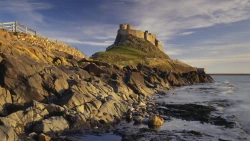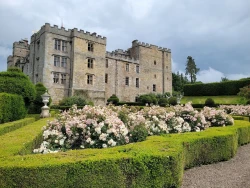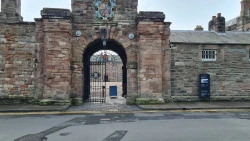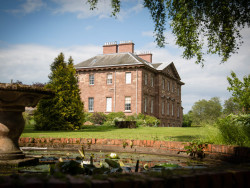
Berwick-upon-Tweed Castle and Ramparts

Description

Berwick-upon-Tweed Castle and Ramparts, situated at the mouth of the River Tweed near the border of two kingdoms, the town of Berwick suffered centuries of conflict, as control of the town passed back and forward between England and Scotland until the late 17th century. Each crisis brought repairs and improvements to the fortifications, culminating in the great artillery ramparts begun in 1558. These survive largely intact and make Berwick one of the most important fortified towns of Europe.

The remains of a medieval castle crucial to Anglo-Scottish warfare, superseded by the most complete and breathtakingly impressive bastioned town defences in England, mainly Elizabethan but updated in the 17th and 18th centuries. Surrounding the whole historic town, their entire circuit can be walked.

Free Entry. If you are looking for Best place for day out with kids and families then this is the perfect destination offering fun, adventure, and unforgettable memories for everyone.

Features

  • Paid
  • Host birthday parties: No

Features

  • Berwick-upon-Tweed Castle and Ramparts, situated at the mouth of the River Tweed near the border of two kingdoms, the town of Berwick suffered centuries of conflict, as control of the town passed back and forward between England and Scotland until the late 17th century. Each crisis brought repairs and improvements to the fortifications, culminating in the great artillery ramparts begun in 1558. These survive largely intact and make Berwick one of the most important fortified towns of Europe.
  • The prosperous royal burgh of Berwick had been part of Scotland for more than three centuries when, in 1292, Edward I of England declared John de Balliol King of Scotland in Berwick Castle. Edward’s feudal claims over Balliol soon led to Scottish discontent and to Scotland’s alliance with France. English policy was to make war. Berwick was captured in 1296 but retaken by Robert Bruce in 1318. The town changed sides several times before finally being recaptured by the English in 1482.
  • High walls and flanking towers, like those built at Berwick, were normally sufficient security against attack and damage from siege engines in the Middle Ages. But the development of gunpowder artillery in the 16th century slowly destroyed the value of traditional fortifications and it was not possible to adapt them satisfactorily.
  • In western Europe an entirely new kind of artillery defence was developed, of which the Berwick ramparts are an outstanding example.The north-east corner of the town was particularly vulnerable to attack and in 1539–42 a massive circular fortification was erected here, later called Lord’s Mount. In Henry VIII’s reign other works elsewhere around the walls were carried out.

Facilities

  • Parking: There is public car parking around the town, not managed by English Heritage. Charges apply.
  • Food & Drinks: Berwick Barracks has shop selling drinks and snacks.
  • Toilets: Berwick Barracks has toilet facilities.

Birthday Parties

Offer Birthday Parties: No

Open Daily.

Address: Parade, Berwick-upon-Tweed, Northumberland TD15 1DF, UK

Post Code: TD15 1DF

Council: Northumberland

County: Northumberland

  • Road Access: The castle is adjacent to Berwick-upon-Tweed railway station. The ramparts surround the town (accessed at various points)
  • Train Access: Berwick-upon-Tweed, adjacent.
  • Bus Access: From surrounding areas.
  • Bicycle Access: Find this site on The National Cycle Network.
  • Parking: There is public car parking around the town, not managed by English Heritage. Charges apply.

0

0 Reviews

Rating breakdown

5
80% Complete (danger)
0
4
80% Complete (danger)
0
3
80% Complete (danger)
0
2
80% Complete (danger)
0
1
80% Complete (danger)
0

Get the best blog stories into your inbox!