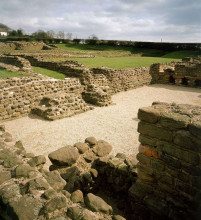
Wall Roman Site

Watling Street, Wall, Lichfield, Staffordshire WS14 0AW, UK
1-99 Years

Description

Wall in Staffordshire was an important staging post on Watling Street, the Roman military road to north Wales. The road network was crucial to the Romans' control over their empire. At staging posts like Wall weary Roman officials, soldiers and imperial messengers could find lodging for the night and change their horses.

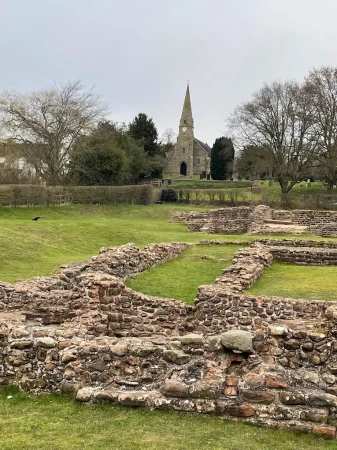
At Wall today you can still see the remains of the Roman settlement of Letocetum, including an inn for travellers and the public baths, with its sequence of cold, warm and hot rooms. The museum provides a fascinating insight into life here and displays many excavated finds. 

Free Entry. If you are looking for Best place for day out with kids and families then this is the perfect destination offering fun, adventure, and unforgettable memories for everyone.

Features

  • Free
  • Host birthday parties: No

Features

  • History of Wall Roman Site: The Roman town at Wall in Staffordshire was known to the Romans as Letocetum. It is located at the intersection between two strategically important Roman roads – Watling Street and Ryknield Street.
  • The Imperial army established a series of forts here as part of its campaigns in the west and the north. After the army had moved on, the site was developed into an official staging post with a mansio and a baths suite. A small town supporting a number of industries then grew up around this core.
  • A Military Base: After their invasion of Britain in AD 43, the Roman army advanced north-west from ports in Kent and established marching camps along the way. There were at least two of these at Wall, situated on high ground to the east of the village, overlooking the line of Watling Street and the wider landscape. Watling Street, which runs from Richborough in Kent to north Wales, was the first major Roman road to be developed after the conquest. By the early 50s AD it linked the important towns of London, Wroxeter and Chester. The road provided quick and convenient access to the hot spots that the Roman army would turn its attention to as the conquest progressed.
  • A Civilian Town: By around AD 80, Wall (Letocetum) had become an important place by the addition of a mansio, or official guesthouse. Establishments such as this existed to facilitate travel for officials of the Roman empire. They were spaced so that a day’s ride would take a traveller to the next one, where a meal, a bed for the night and a change of horse could be had, though probably not for the general public.
  • Later and Post-Roman Period: Official travel was much reduced in the 3rd century, due to political instability on the Continent, and the mansio was demolished around AD 250. The bath house, which had been enlarged a number of times, survived much longer, until around AD 300. In the 4th century a square defensive enclosure was built across the line of Watling Street, blocking the road, possibly in order to extract tolls from travellers. This smaller but well-defended settlement is likely to have retained key functions such as holding a market and the collection of taxes, but by the end of the 4th century there are clear signs that the settlement at Wall was much reduced in size.
  • Archaeology at Wall: The archaeological remains of the Roman site extend over a large area and have been routinely encountered by local people working the land. Many excavations have taken place, both on the site of the baths and mansio and on sites of the wider settlement – the forts, domestic buildings and industrial sites, as well as cemeteries. 
  • An Extraordinary Discovery: During the 1912–14 excavations, nine building stones were found. They were carved with pre-Roman cult images including depictions of horned warriors, Celtic heads and local gods. They had been reused in the construction of the final phase of the mansio, dating to the 170s AD. Some had been laid with their potent images facing downwards or into the core of the wall, and the intent may have been to contain their power and possibly redeploy it for the protection of the new structure.
  • The Museum and Collections: During the 1912–14 excavations a temporary museum was established on the site. Soon after, that display was made permanent when the finds were moved into a small 19th-century agricultural building nearby, which is still the site museum today.

Facilities

  • Parking: Free parking is available 50m from the entrance to the site.
  • Toilets: Toilet facilities are available during museum opening hours. 
  • Dogs: Dogs on leads are welcome.

Price

Price: Free

Birthday Parties

Offer Birthday Parties: No

Opening Times: The open air site is open during any reasonable daylight hours. The museum will be open 11am-4pm on the following days in 2025: July  26th & 27th. August 2nd, 3rd, 9th, 10th, 16th, 17th, 23rd, 24th & 25th. September 13th, 14th, 27th & 28th. October 11th, 12th, 25th & 26th.

Address: Watling Street, Wall, Lichfield, Staffordshire WS14 0AW, UK

Post Code: WS14 0AW

Council: Lichfield

County: Staffordshire

  • Road Access: Off Eastbound A5 at Wall, near Lichfield.
  • Bus Access: Arriva Midland service 35B.
  • Train Access: Shenstone 1 1⁄2 miles.
  • Bicycle Access: Find this site on The National Cycle Network.
  • Parking: Free parking is available 50m from the entrance to the site.

0

0 Reviews

Rating breakdown

5
80% Complete (danger)
0
4
80% Complete (danger)
0
3
80% Complete (danger)
0
2
80% Complete (danger)
0
1
80% Complete (danger)
0

Get the best blog stories into your inbox!