
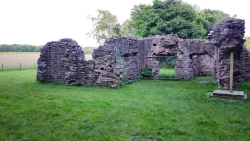
Ravenglass Roman Bath House

Description

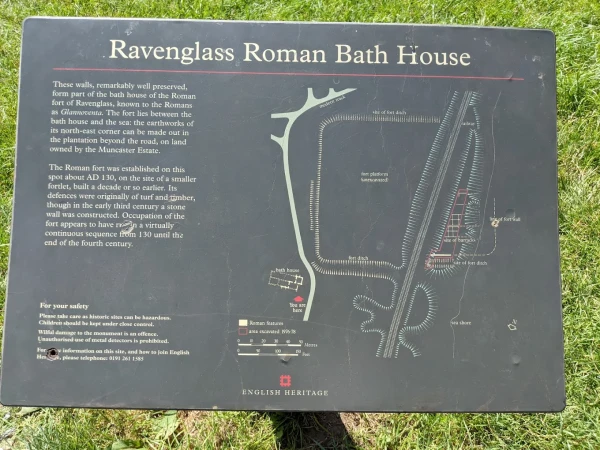
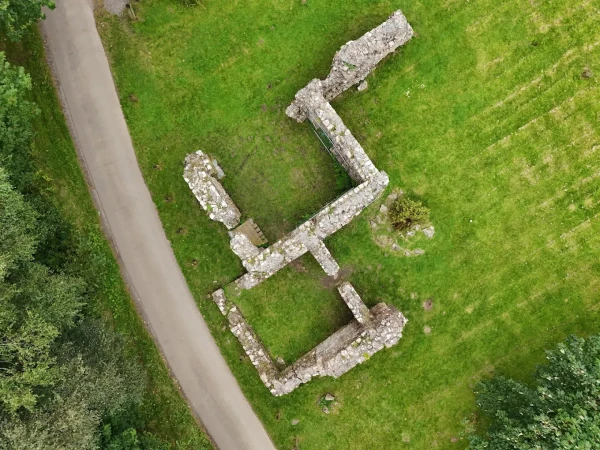
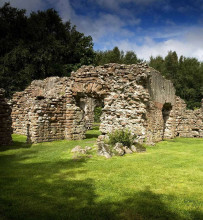
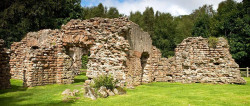
Ravenglass Roman Bath House the remains of the bath house of Ravenglass Roman Fort, established around AD 130, are among the tallest Roman structures surviving in northern Britain – the walls stand almost 4 metres high. The fort at Ravenglass (whose earthworks can be seen near the bath house) guarded what was probably a useful harbour, and there is evidence that soldiers stationed here served in Hadrian's fleet.

For almost 300 years a large Roman fort stood at Ravenglass. Guarding the mouth of the river Esk, it was probably known to the Romans as Itunocelum (‘the promontory at the water’). It was occupied by a garrison of about 500 soldiers and lay at the start of a crucial road that led east into the heart of the Lake District. 

Free Entry. If you are looking for Best place for day out with kids and families then this is the perfect destination offering fun, adventure, and unforgettable memories for everyone.

Features

  • Free
  • Host birthday parties: No

Features

  • History of Ravenglass Roman Bath House: For almost 300 years a large Roman fort stood at Ravenglass. Guarding the mouth of the river Esk, it was probably known to the Romans as Itunocelum (‘the promontory at the water’). It was occupied by a garrison of about 500 soldiers and lay at the start of a crucial road that led east into the heart of the Lake District.
  • The fort’s impressive bath house, which lay just outside the fort, is one of the best-preserved Roman buildings in northern England, evoking the culture the Romans brought to Britain.
  • The fort at Ravenglass: A small outpost was initially built at Ravenglass during efforts to secure control over the Lake District early in the reign of Emperor Hadrian (AD 117–38). This was later replaced by a large fort.
  • The Romans in Cumbria: Ravenglass was one of three forts joined by a road that secured Roman control of the Lake District. The Roman army had rapidly established control over the south and east of Britain after the invasion of AD 43, and from around AD 70 they advanced into northern England. However, at this stage they bypassed the Lake District, instead marching north from Chester into Scotland.
  • The fort garrison: The only unit of the Roman army known to have been connected to Ravenglass was the First Cohort of the Aelia Classica, who were present at the fort by AD 158. They were auxiliaries – soldiers recruited from the large number of non-citizens living within the Roman Empire, who served in return for citizenship for themselves and their descendants. Auxiliaries often had specialist skills, such as archery, horsemanship or seamanship, that were vitally important to the Roman army, and often served across the frontiers of the empire.
  • An honourable discharge: In 1995, fragments of a rare bronze Roman document were found (one by a dog) on the foreshore next to Ravenglass Fort. It was a military diploma, a legal document that proved its owner had completed 25 years’ military service and been granted the coveted right of Roman citizenship.
  • The fort bath house: The fort bath house is the only Roman building still visible at Ravenglass. Like many fort bath houses, it sat outside the fort, in this case just beyond the north-east corner.
  • Roman bathing: Bathing was central to daily Roman life in way that was quite different from modern bathing. The Romans bathed together in bath houses that featured rooms heated to different temperatures and shared baths. They saw bathing as not only crucial to their health, but also an important part of what made them Roman. It was integral to the social life of the community.
  • The external settlement: The fort was only one part of the Romano-British community at Ravenglass. Roman forts often attracted large settlements around their walls, and recent archaeological excavations here have revealed that one lay to the east and north. Typical Roman buildings lined the two large roads that ran out of the north and east gates. These buildings usually incorporated shop fronts and workshops as well as domestic space for the owners. 
  • Discovery, preservation and excavation: The bath house first attracted the attention of antiquarians in the early 17th century. It was long thought to be medieval, and came to be known as Walls Castle.
  • Mary Fair: Perhaps the most constant and diligent advocate for the study and preservation of Ravenglass was Mary Fair (1875–1955), an archaeologist, author, explorer, photographer and tireless enthusiast for Eskdale’s rich history and traditions.

Facilities

Parking: There is charged public car parking in the town at Ravenglass, not managed by English Heritage. The bath house is signposted from the car park.

Price

Price: Free

Birthday Parties

Offer Birthday Parties: No

Exterior viewing only. Open any reasonable time during daylight hours.

Address: Ravenglass, UK

Post Code: CA18 1SR

Council: Cumberland

County: Cumbria

  • Road Access: 1⁄2 mile SE of Ravenglass station, via signposted footpath from village car park and then private road. No vehicular access or parking at site.
  • Bus Access: Stagecoach service 6 (Mon-Sat) or Stagecoach/3D service X6 (Sun only)
  • Train Access: Ravenglass (nearby)
  • Bicycle Access: Find this site on The National Cycle Network.
  • Parking: There is charged public car parking in the town at Ravenglass, not managed by English Heritage. The bath house is signposted from the car park.

0

0 Reviews

Rating breakdown

5
80% Complete (danger)
0
4
80% Complete (danger)
0
3
80% Complete (danger)
0
2
80% Complete (danger)
0
1
80% Complete (danger)
0

Get the best blog stories into your inbox!