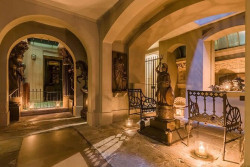
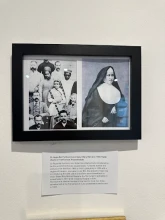
Anaesthesia Heritage Centre Museum

Description

Anaesthesia Heritage Centre Museum the leading UK museum dedicated to the history of anaesthesia. Visit our museum to explore the inspiring stories of the people, past and present, who have done so much to keep patients safe and pain-free.

The museum grew out of A. Charles King’s private collection of historic anaesthetic apparatus, which he donated to the Association of Anaesthetists in 1953. The collection has since grown to include nearly 5,000 objects, 1,000 archive documents and 7,000 library items.

Entry is free. If you are looking for Best place for day out with kids and families then this is the perfect destination offering fun, adventure, and unforgettable memories for everyone.

Features

  • Free
  • Host birthday parties: No

Features

Collection

  • Adopt an object: The Museum of Anaesthesia is launching an Adopt an object campaign to raise funds for a commemorative plaque for pioneer anaesthetist Sir Ivan Magill. In his long career, Magill introduced techniques and designed tools that are still around today, many decades later. In the 1930s, he was also instrumental in setting up the Diploma in Anaesthetics – the first formal qualification for anaesthetists in the United Kingdom – which raised the specialty’s status in the medical world.
  • Oral histories: The Museum of Anaesthesia has been collecting oral histories from notable anaesthetists for several years. We have interviewed several military anaesthetists for the World War One exhibitions. Doctors who served in Northern Ireland, Bosnia, Iraq and Afghanistan have taken part and discussed their experiences and the developments in patient care they were involved in. 
  • Films: In 1944, Westminster Hospital produced a series of training films for anaesthetists, covering subjects including chloroform & ether anaesthesia, handling & care of the patient, and a step-by-step epidural technique.
  • COVID-19 Contemporary Collecting: Contemporary collecting is defined as the collecting of objects, stories and material culture that reflect the recent past and what is happening today. The museum is preparing to tell the story of the COVID-19 pandemic through the voices of anaesthetists, intensivists and patients, and by collecting anaesthetic equipment which was critical to patient care and safety.

Facilities

Parking: We do not have a car park. Local parking with NCP is available for a charge.

Price

Price: Free

Birthday Parties

Offer Birthday Parties: No

Monday to Friday: 10:00 – 16:00 (closed bank holidays). Last admission is 15:30. 

Address: 21 Portland Place, London W1B 1PY, UK

Post Code: W1B 1PY

Council: Westminster

County: Greater London

  • By bus: These buses stop close to the building: 7, 8, 10, 18, 25, 27, 30, 55, 73, 88, 98, 176, 205, 553, C2. Find out the best way to get to us by bus with Transport for London’s journey planner.
  • By train: If you are travelling by train, the nearest stations are Euston, King’s Cross and King’s Cross St Pancras.
  • By bike: There is a Santander Cycles docking station at either end of Portland Place. A complete list of docking stations is available on the Transport for London website. There is bike storage at the museum if you are travelling on your own bike, but please note the storage is accessed via stairs.
  • By car: We do not have a car park. Local parking with NCP is available for a charge.
  • By underground: The nearest tube stations are Oxford Circus (Bakerloo, Central, and Victoria lines), Regent’s Park (Bakerloo line), and Great Portland Street (Circle, Metropolitan and Hammersmith & City lines). The closest stations with step-free access are Warren Street (Victoria line only) and Bond Street (Jubilee line only). 
  • Parking: We do not have a car park. Local parking with NCP is available for a charge.

5

0 Reviews

Rating breakdown

5
80% Complete (danger)
0
4
80% Complete (danger)
0
3
80% Complete (danger)
0
2
80% Complete (danger)
0
1
80% Complete (danger)
0

More Day Outs in City of Westminster

Get the best blog stories into your inbox!