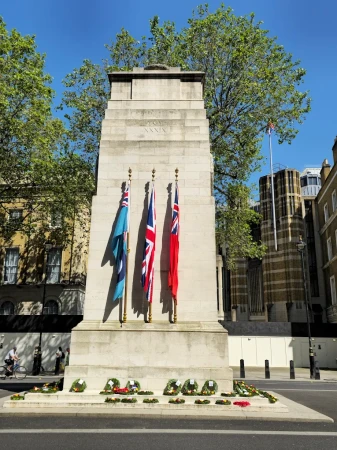

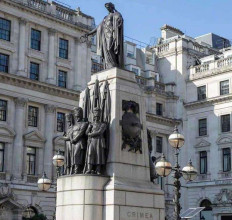
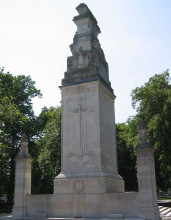
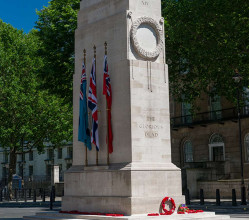
The Cenotaph

The Cenotaph, Whitehall, London SW1A 2ET, UK
1-99 Years

Description

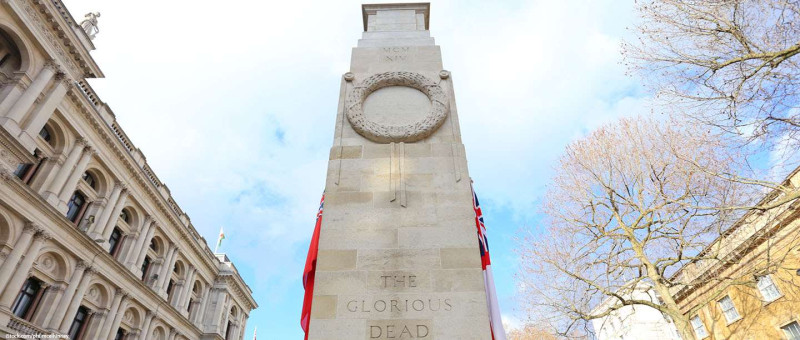
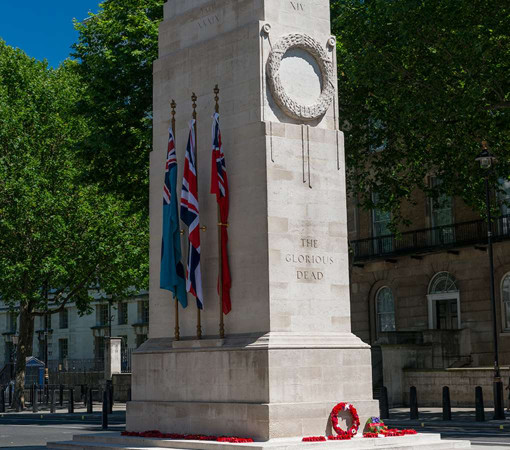
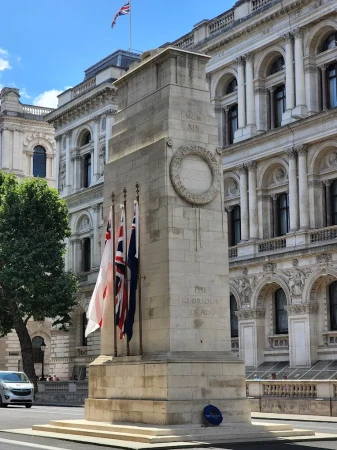
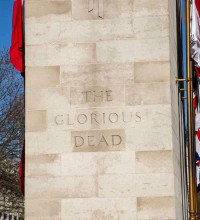
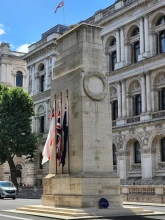
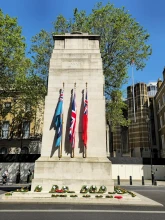
The Cenotaph – or ‘empty tomb’ in Greek – has been the focus of our nation’s remembrance for a century. Initially a temporary monument designed by Edwin Lutyens in 1919, the Cenotaph in Whitehall was replaced with the permanent Portland stone memorial and unveiled on Armistice Day, 11 November 1920. The memorial became a central point for all those whose family and friends had died during the First World War with no known grave.

Now in the care of English Heritage, the Cenotaph is the site of the National Service of Remembrance every November. This annual service commemorates the contribution of all British and Commonwealth military and civilian servicemen and women involved in the two World Wars and later conflicts. 

Free entry. If you are looking for Best place for day out with kids and families then this is the perfect destination offering fun, adventure, and unforgettable memories for everyone.

Features

  • Free
  • Host birthday parties: No

Features

  • History of the Cenotaph: The Cenotaph in Whitehall is Britain’s chief national war memorial to the dead of the First and Second World Wars and subsequent conflicts. Taking its name from the Greek words meaning ‘empty tomb’, it is the focus of national ceremonies of remembrance, held annually since 1919.
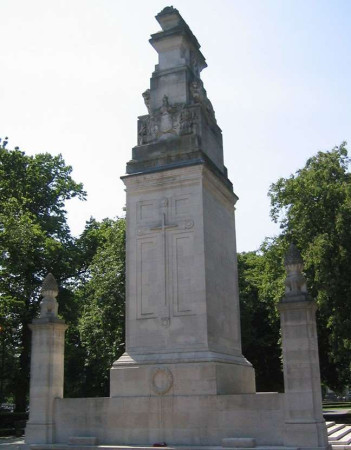
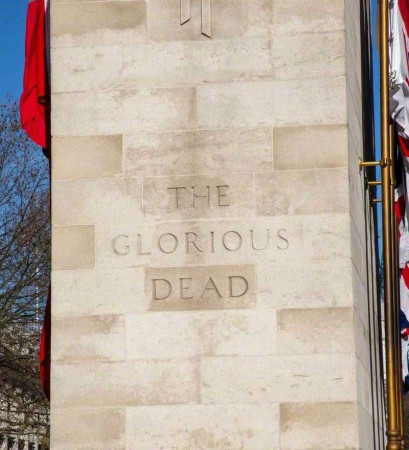
  • Designed by Sir Edwin Lutyens, the Cenotaph is a work of great geometrical purity and sophistication. Its simplicity and austerity give it a universal quality, memorialising soldiers of all races and religions.
  • Burial and Commemoration: By the end of the First World War over 1,100,000 men from Great Britain and the British Empire had died in the conflict – every community and family sharing to some degree in the grief for those lost lives. 
  • War Memorials in England: Before the 20th century, war memorials in England, as in the United Kingdom generally, had mostly been conceived as memorials to victory. Wealth and social rank usually determined which individuals were commemorated – many churches and cathedrals have monuments to commanders and officers who had fallen in combat. There were almost no monuments to the common soldiers and sailors who had died and were buried in unmarked graves overseas, or at sea. 
  • The First Cenotaph: Although hostilities ceased with the Armistice of 11 November 1918, peace was not formally established in Europe until the signing of the Treaty of Versailles on 28 June 1919. In the lead up, the British government began to plan a day to celebrate victory and the peace which was due to be signed. They learnt that the French government was planning a victory parade through Paris to be held on 14 July, the plans for which included a ‘catafalque’ as a memorial to the dead, which the passing troops would salute. Impressed by this idea, Prime Minister David Lloyd George asked Sir Edwin Lutyens, the most celebrated British architect of the day, to design something similar. It was envisaged as a temporary structure erected for the occasion.
  • Sir Edwin Lutyens: Edwin Lutyens (1869–1944), the son of a soldier turned artist, was articled to the country-house architect Sir Ernest George. He established his own practice in 1888, becoming a celebrated designer of Arts and Crafts houses in the south of England. After 1900 Lutyens’s work developed to include Classical buildings inspired by late 17th-century English architecture, in particular the work of Sir Christopher Wren.   
  • The permanent monument: The public’s wish for the first Cenotaph to be replaced with a permanent version was unforeseen, but it was widespread and very strong. An alternative location on Horse Guards was considered, but Lutyens favoured the existing Whitehall site and on 30 July 1919 the Cabinet approved the idea of a permanent monument there. 
  • Design of the Cenotaph: Lutyens’s original 1919 design was for a tall pylon supporting a sarcophagus or coffin, adorned with laurel wreaths and the flags of the armed services. The permanent Cenotaph is very similar to the first, but is made of white Portland stone with subtle adjustments. His design methods were based on those of the ancient Greek architects of the Parthenon. Using these Classical proportions, all the surfaces subtly curve so that the verticals would meet at a point 1,000 feet above the ground, and the horizontals 900 feet to the side. 
  • The Cenotaph’s influence: Alongside the Cenotaph, war memorials were built throughout Great Britain. Some, such as the ‘Cross of Sacrifice’ designed by the architect Sir Reginald Blomfield, were specifically Christian in character and appropriate for churchyards and church cemeteries. Memorials for larger towns and cities were usually Classical and without specific religious imagery, probably for similar reasons to the Cenotaph, in that they had to have universal significance.  

Facilities

NA

Price

Price: Free

Birthday Parties

Offer Birthday Parties: No

Open any reasonable daylight hours.

Address: The Cenotaph, Whitehall, London SW1A 2ET, UK

Post Code: SW1A 2ET

Council: Westminster

County: Greater London

  • Bus Access: Bus routes 11, 12, 24, 6, 87, 88 and 9 pass near the Cenotaph, Whitehall.
  • Train Access: Charing Cross station is located a short walk from the Cenotaph.
  • Tube Access: Westminster and Charing Cross tube stations are located near the Cenotaph.

0

0 Reviews

Rating breakdown

5
80% Complete (danger)
0
4
80% Complete (danger)
0
3
80% Complete (danger)
0
2
80% Complete (danger)
0
1
80% Complete (danger)
0

More Day Outs in City of Westminster

Get the best blog stories into your inbox!