Rochester Castle

Castle Gardens, Rochester ME1 1SW, UK
1-99 Years
Paid

Description

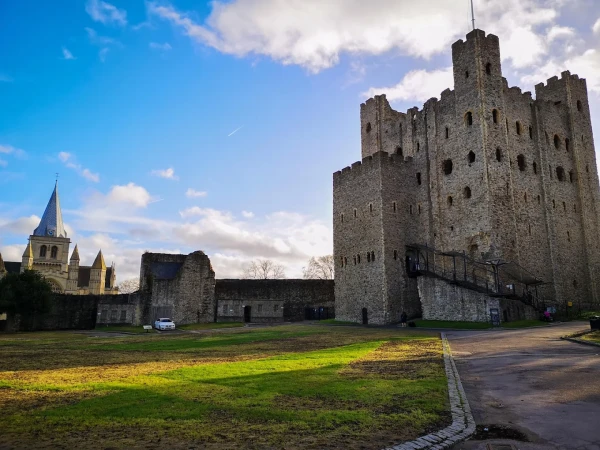
Rochester Castle Built to command an important river crossing, the castle built in stone by Gundulf, Bishop of Rochester, in the 1080s was one of the earliest such buildings in England. In 1127 Henry I entrusted it to the Archbishop of Canterbury, who began to build the great keep – a masterpiece of medieval architecture, and the tallest such building to survive in Europe.

The castle endured three sieges, including a famous assault by King John in 1215, when one corner of the keep was destroyed. Although it became redundant as a royal stronghold in the late Middle Ages and fell into ruin in the 17th century, it remains a potent symbol of medieval secular power.  

Price starts from £9.50 for Adults, £4.50 for Children(5-17 yrs) and £22.50 for Family(2 adults, 2 children). If you are looking for Best place for day out with kids and families then this is the perfect destination offering fun, adventure, and unforgettable memories for everyone.

Features

  • Paid
  • Host birthday parties: No

Features

  • Strategically placed astride the London Road, guarding an important crossing of the River Medway, this imposing fortress has a complex history of destruction and rebuilding. Today it stands as a proud reminder of the history of Rochester, along with the cathedral and cobbled streets.
  • Its Norman tower-keep of Kentish ragstone was built about 1127 by William of Corbeil, Archbishop of Canterbury, with the encouragement of Henry I. Consisting of three floors above a basement, it still stands 113 feet high. Attached is a tall protruding forebuilding, with its own set of defences to pass through before the keep itself could be entered at first floor level.
  • In 1215, garrisoned by rebel barons, the castle endured an epic siege by King John. Having first undermined the outer wall, John used the fat of 40 pigs to fire a mine under the keep, bringing its southern corner crashing down. Even then the defenders held on, until they were eventually starved out after resisting for two months.
  • Rebuilt under Henry III and Edward I, the castle remained as a viable fortress until the 16th century.
  • History of Rochester Castle: Built to command an important river crossing, the castle built in stone by Gundulf, Bishop of Rochester, in the 1080s was one of the earliest such buildings in England. In 1127 Henry I entrusted it to the Archbishop of Canterbury, who began to build the great keep – a masterpiece of medieval architecture, and the tallest such building to survive in Europe. The castle endured three sieges, including a famous assault by King John in 1215, when one corner of the keep was destroyed. Although it became redundant as a royal stronghold in the late Middle Ages and fell into ruin in the 17th century, it remains a potent symbol of medieval secular power.
  • Before The Castle: The city of Rochester originated in a Roman settlement (Durobrivae) on the east bank of the river Medway. A major road between east Kent and London crossed the river at this point.[1] The city was walled from the 3rd century, but was largely abandoned in the early 5th century with the end of Roman rule in Britain. It attained new importance from the 7th century as a bishopric.
  • Construction of the Keep: In 1127 Henry I (r.1100–35) entrusted the castle to William de Corbeil, Archbishop of Canterbury (d.1136), on condition that the archbishop build fortifications there. This led to the construction of the great keep, described by contemporaries as ‘outstanding’ and ‘noble’.
  • The Siege of 1215: Between October and December 1215 King John (r.1199–1216) laid siege to Rochester Castle in a bid to retake it from rebels. Having broken Rochester Bridge and captured the castle bailey, the royal army used siege engines to bombard the rebels inside the keep with stones, while miners attacked the building’s south-east turret.
  • The 13th Century: John’s son Henry III (r.1216–72) repaired the keep and added a complex of residential buildings in the bailey, described in many detailed writs.[11] One wall of the king’s chamber survives in the west curtain wall (see Description of Rochester Castle).
  • Late Medieval and Tudor Decline: The damage of 1264 had a lasting impact. The royal hall and chambers in the bailey were never rebuilt, and the castle went into a long period of decline.[13] Unusually the keep, by then redundant in many other royal castles, became the principal residential building.[14] Elizabeth (d.1327), wife of Robert Bruce, King of Scotland (r.1306–29), was briefly a prisoner in Rochester Castle in 1314.
  • Public Amenity and Ancient Monument: Rochester Castle played no role in the Civil Wars (1642–51) and so it was never slighted. It appears, however, that a violent fire took place in the keep before the 1660s, which reduced the building to ruin.
  • Museum: Although there is no museum on the site, Rochester Guildhall Museum is located roughly five minutes walk from the castle.
  • Gardens: The castle has extensive grounds, including a number of grassy banks.

Facilities

  • Parking: There is a free of charge coach park located in nearby Corporation Street, and a coach drop off point at the rear of the visitor information centre.
  • Food And Drink: Although there is no café on the site, the shop sells a selection of drinks and snacks.
  • Toilets: The toilets are located in the castle gardens.
  • Dogs: Dogs on leads are welcome in the grounds only. Assistance dogs welcome across the site.

Price

Price: Paid

Price Details

  • Adults: £9.50
  • Children (5-17 yrs): £4.50
  • Concessions: £6.50
  • Family (2 adults, 2 children): £22.50
  • English Heritage Members and Under 5's: Free

Membership: Starts from £42

For more information please visit: https://www.english-heritage.org.uk/join/

Pricing URL: https://www.visitmedway.org/attractions/rochester-castle-2436/

Birthday Parties

Offer Birthday Parties: No

Tue – Sun: 10am - 4pm (last entry 3.15pm)

Address: Castle Gardens, Rochester ME1 1SW, UK

Post Code: ME1 1SW

Council: Medway

County: Kent

  • Road Access: By Rochester Bridge (A2); junction 1 of M2 and junction 2 of M25.
  • Bus Access: Services in Rochester are operated by Arriva and Nu Venture. Alight in Corporation Street within a short distance of the castle.
  • Train Access: Rochester 1⁄2 mile.
  • Bicycle Access: http://www.sustrans.org.uk.
  • Parking: There is no parking directly on site, however there are a number of pay and display (coin operated) car parks located near by. There is a free of charge coach park located in nearby Corporation Street, and a coach drop off point at the rear of the visitor information centre.

5

0 Reviews

Rating breakdown

5
80% Complete (danger)
0
4
80% Complete (danger)
0
3
80% Complete (danger)
0
2
80% Complete (danger)
0
1
80% Complete (danger)
0

Get the best blog stories into your inbox!