De Havilland Aircraft Museum

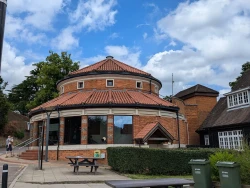
De Havilland Aircraft Museum, London Colney, St Albans, UK
1-99 Years
Paid

Description

Welcome to the De Havilland Aircraft Museum, formerly the de Havilland Aircraft Heritage Centre, is a volunteer-run aviation museum in London Colney, Hertfordshire, UK. The Museum is a popular destination for individuals and groups of all types. 

We are pleased to welcome visitors from Coach Tours, U3A’s, Probus, WI, Rotary, Round Table, Lions, Motor Clubs (Cars and Motorcycles), Retirement groups, Youth Groups (Beavers, Cubs, Brownies, Guides, Scouts, Young Farmers, Cadets and many more), Special Interest groups and often groups who are just friends.

Price starts from £12.00 for Adults, £6.50 for Children(5-16 years) and £31.50 for Family. If you are looking for Best place for day out with kids and families then this is the perfect destination offering fun, adventure, and unforgettable memories for everyone.

Features

  • Paid
  • Host birthday parties: Yes

Features

Aircraft & Exhibits:

  • Museum Aircraft and Exhibits: The museum has a large number of exhibits, including complete aircraft as well as a range of historical artifacts. 
  • DH 98 Mosquito: The fast, high-flying Mosquito was for much of the War able to roam almost at will over enemy-occupied territory. Built of non-strategic materials (i.e. wood), it was designed for speed and range as a two-seat unarmed light bomber, unarmed reconnaissance aircraft and long range fighter.
  • Airspeed Horsa: The Airspeed Horsa carried two pilots, and 25 or more troops or loads like a jeep and anti-tank gun. It had a cylindrical plywood fuselage, a high wing with very large flaps, and jettisonable main undercarriage, the glider then landing on a central skid and the nosewheel.
  • British Aerospace BAe 146-100: The BAe 146 was built by British Aerospace as a short-haul airliner/regional jet. The BAe 146 has a high monoplane wing with a T-tail configuration and four turbofan engines. A total of 221 were built between 1983 and 1992.
  • De Havilland DH106 Comet 1A: The de Havilland DH106 ‘Comet’ was the World’s first turbojet-powered airliner, designed and built at Hatfield and first flown by John Cunningham in 1949.
  • De Havilland DH89A Dragon Rapide: The DH89A Dragon Rapide is an all-wood, twin-engine biplane passenger aircraft. The first flight of the prototype was from Hatfield by Hubert Broad on 17th April 1934. 
  • De Havilland DH100 Vampire FB.6: Designed at Salisbury Hall, and built and first flown at Hatfield in 1943, the Vampire single-seat fighter was the first de Havilland jet aircraft. It is of compact pod and twin-boom design, with a single DH Goblin centrifugal turbojet behind the cockpit, fed by wing-root air intakes. 
  • De Havilland DH112 Sea Venom FAW.22: Designed and built at Hatfield and first flown in 1949, the DH112 Venom single-seat fighter was a progressive development of the Vampire. It had a fatter fuselage ‘pod’ to take the much larger, higher thrust DH Ghost engine, and a thinner wing (10% instead of 14%) with 17 degree leading-edge sweep for higher critical Mach number. 
  • De Havilland DH110 Sea Vixen FAW.2: Designed and built at Hatfield, the DH110 land-based two-seat, twin-engined all-weather fighter of 1951 was later adapted as the carrier-based Sea Vixen, the last and most advanced and comple of the de Havilland fighters.
  • Rolls Royce Merlin Mk 25 (cutaway): The restored Starboard engine of Mosquito night fighter HJ719 built in 1943 in Hatfield. It is displayed as a “cutaway”. Visitors to the museum can see this engine turn over, and see the pistons, valves and spark plug actions.
  • De Havilland dh 100 vampire fb5 vv217: The main Vampire production version was the DH Vampire FB.5 fighter bomber (a modified DH Vampire F.3) and this variant was also be the basis for many of the export versions. This aircraft was owned by the Ministry of Supply, but used by de Havilland for test flying. 
  • De Havilland Gnome: The licence built de Havilland Gnome turbine engine was used to power late versions of the Whirlwind helicopter, and two were used in the Wessex helicopter replacing piston engines.
  • De Havilland Gyron: The Gyron was designed in 1951 by de Havilland as a private venture supersonic turbojet. The Gyron was first run in a test bed on 5th January 1953. Flight tests began in 1955 in a Short Sperrin under a Ministry of Supply contract. 
  • De Havilland Spectre Rocket: The Spectre rocket engine was designed to be the boost engine in a mixed power plant jet interceptor, allowing the aircraft to climb rapidly to high altitude to intercept high flying bombers.

Facilities

  • Parking: The Museum Car Park is FREE to all visitors. Please do not not park in the entry lane to our neighbours’ properties and garages – Thank you.
  • Food & Drinks: The museum cafe serves hot and cold drinks as well as a selection of sandwiches and hot snacks.

Price

Price: Paid

Price Details

Standard prices:

  • Adult: £14 with donation & £12 without donation.
  • Concessions: £12 with donation & £10.90 without donation.
  • Child (5–16): £8 with donation & £6.50 without donation.
  • Family: £35 with donation & £31.50 without donation.

Pricing URL: https://www.dehavillandmuseum.co.uk/visit-us/#admission-prices

Birthday Parties

Offer Birthday Parties: Yes

Birthday Party Details

Celebrations and Parties
Our New Hangar has a large Mezzanine floor space with meeting rooms and a large event space which overlook our collection of de Havilland Aircraft.Its a unique venue for parties,celebration dinners,business meetings and much more.

For more information and booking enquiries please contact Events@dehavillandmuseum.co.uk
For more information please visit: https://www.dehavillandmuseum.co.uk/venue-hire/

Summer (30 March–31 October): 

  • Tuesday–Sunday: 10:30am–5:00pm (last entry 4:00pm)
  • Closed: Monday except Bank Holidays.

Winter (1 November–29 March): 

  • Tuesday–Sunday: 10:30am–4:00pm (last entry 3:00pm)
  • Closed: Monday except Bank Holidays.

Address: De Havilland Aircraft Museum, London Colney, St Albans, UK

Post Code: AL2 1BU

Council: St Albans

County: Hertfordshire

  • By public transport: A number 84 bus from St. Albans City station or Potters Bar Railway Stations will stop just outside the driveway that leads to the Museum. The walk is approximately 400m.
  • By private vehicle: Entry to the Museum for cars is via the ORANGE route, please note the speed limit. If you are travelling clockwise on the M25 (from Heathrow or M1) once you leave the motorway at the first roundabout you will need to follow directions for the M25 (anticlockwise/westbound ) back to Heathrow. This will take you across the bridge over the M25. Once over the bridge take the turning for the B556 to South Mimms.
  • By coach: Coaches by arrangement only please, ensure you use the RED Route.
  • Parking: The Museum Car Park is FREE to all visitors. Please do not not park in the entry lane to our neighbours’ properties and garages – Thank you.

5.00

0 Reviews

Rating breakdown

5
80% Complete (danger)
0
4
80% Complete (danger)
0
3
80% Complete (danger)
0
2
80% Complete (danger)
0
1
80% Complete (danger)
0

Get the best blog stories into your inbox!