Boxgrove Priory

The Street, Boxgrove, Chichester, West Sussex PO18 0EE, UK
1-99 Years
Paid

Description

Boxgrove Priory Founded in the early 12th century by a local Norman lord, Boxgrove Priory was a small monastery of Benedictine monks. It was originally a cell, or dependent monastery, of Lessay Abbey in Normandy, consisting of only three monks, but the patronage of local elites enabled the community to reach 19 monks in the mid 13th century.

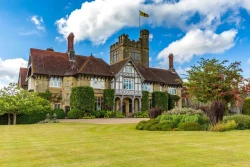
The small Benedictine priory of Boxgrove in West Sussex was founded in about 1107, originally for just three monks. In a beautiful setting at the foot of the South Downs, the principal remains include a fine two-storey guest house, roofless but standing to its full height at the gable ends. The eastern parts of the priory church became Boxgrove’s parish church after the Suppression of the Monasteries.

Free Entry. If you are looking for Best place for day out with kids and families then this is the perfect destination offering fun, adventure, and unforgettable memories for everyone.

Features

  • Paid
  • Host birthday parties: No

Features

  • Foundation and early history: In 1105, Robert de Haye, a Norman knight, granted the church of St Mary, Boxgrove, together with extensive estates in the vicinity, to the Benedictine abbey of Lessay, Normandy. There were close historical connections between Robert and this monastery, and three monks were dispatched from Lessay to establish a cell at Boxgrove in about 1117. The Domesday Book, the great survey of landownership in England completed in 1086, mentions ‘the clerks of the church’ at Boxgrove, which suggests the presence there of a community of secular canons (a group of priests who did not live according to a monastic rule). These canons would have been supplanted by the monks from Lessay.
  • A thriving community: The church at Boxgrove functioned as both a parish church – where local people worshipped – and a monastic church. Monks and parishioners were strictly segregated, with the parish using the nave at the west end and the monks the eastern parts.
  • Life in the monastery: Life within the priory was governed by the Rule of St Benedict, a demanding set of instructions that covered most aspects of monastic life. The monks’ waking hours were structured around communal prayer in the priory church, reading in the cloister and manual work.
  • Relations with Lessay: Relations with Lessay were not always harmonious. At the end of the 13th century, its abbot attempted to interfere with the right of the Boxgrove monks to elect their own prior. The monks mounted a spirited defence, their case reaching the papal chancery in Rome. In 1286, Pope Honorius IV appointed the Prior of Arundel and Dean of Chichester to adjudicate.
  • Later history: Relations with the Boxgrove parish priest were not always without conflict. A dispute between the priory and the vicar of the parish in 1409 was only settled after the Bishop of Chichester intervened. The findings of visitations for the most part suggest that Boxgrove was well-run, the monks adhering to their vows. In 1475, when the community had a prior and nine monks – a healthy number for the time – religious life at the priory was said to be better than at any time during the previous 40 years.
  • The Dissolution and after: However, Boxgrove was soon swept up in the religious changes of the reign of Henry VIII. In early 1537, Boxgrove was dissolved as one of the ‘lesser’ monasteries. At this time, the community consisted of the prior, eight monks (all priests), a novice, 28 servants and eight children, the latter probably schoolboys. The commissioner responsible for the priory’s suppression wrote to Thomas Cromwell, Henry VIII’s chief minister, saying that thanks to Lord de la Warr’s assistance, more profit was made from the dissolution of Boxgrove than any other monastery in Sussex.

Facilities

  • Parking: There is a small car park at the priory.
  • Dogs: Dogs on leads are welcome.

Birthday Parties

Offer Birthday Parties: No

Open any reasonable time during daylight hours.

Address: The Street, Boxgrove, Chichester, West Sussex PO18 0EE, UK

Post Code: PO18 0EE

Council: Chichester

County: West Sussex

  • Road Access: North of Boxgrove; 4 miles east of Chichester, on minor road off A27.
  • Bus Access: Stagecoach bus 55/55a (Sun only); Compass bus 99/99A.
  • Train Access: Chichester 4 miles.
  • Bicycle Access: Find this site on The National Cycle Network.
  • Parking: There is a small car park at the priory.

0

0 Reviews

Rating breakdown

5
80% Complete (danger)
0
4
80% Complete (danger)
0
3
80% Complete (danger)
0
2
80% Complete (danger)
0
1
80% Complete (danger)
0

Get the best blog stories into your inbox!