Sewingshields Wall - Hadrian's Wall

Description

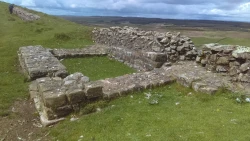
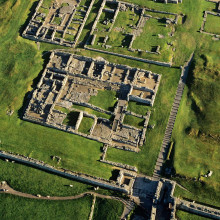
Sewingshields Wall - Hadrian's Wall this length of Hadrian’s Wall, impressively sited along the Whin Sill, commands fine views of many prehistoric and later earthworks to the north. A milecastle within this wall, perched on the very edge of the crag, was reoccupied by a farm in the Middle Ages. 

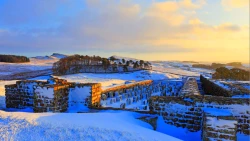
Sewingshields is near the eastern end of the spectacular central sector of Hadrian’s Wall, where it was built along the crest of a high rocky outcrop, the Great Whin Sill. For about a mile, several lengths of the Wall have been conserved here, together with a milecastle and two turrets. The milecastle is perched on the very edge of the outcrop, while turret 35a (Sewingshields) is about 530 metres west, near the highest point of Sewingshields Crags, and turret 34a (Grindon) 960 metres east.

Free Entry. If you are looking for Best place for day out with kids and families then this is the perfect destination offering fun, adventure, and unforgettable memories for everyone.

Features

  • Free
  • Host birthday parties: No

Features

  • History of Sewingshields Wall, Milecastle and Turrets: Sewingshields is near the eastern end of the spectacular central sector of Hadrian’s Wall, where it was built along the crest of a high rocky outcrop, the Great Whin Sill. For about a mile, several lengths of the Wall have been conserved here, together with a milecastle and two turrets. The milecastle is perched on the very edge of the outcrop, while turret 35a (Sewingshields) is about 530 metres west, near the highest point of Sewingshields Crags, and turret 34a (Grindon) 960 metres east.
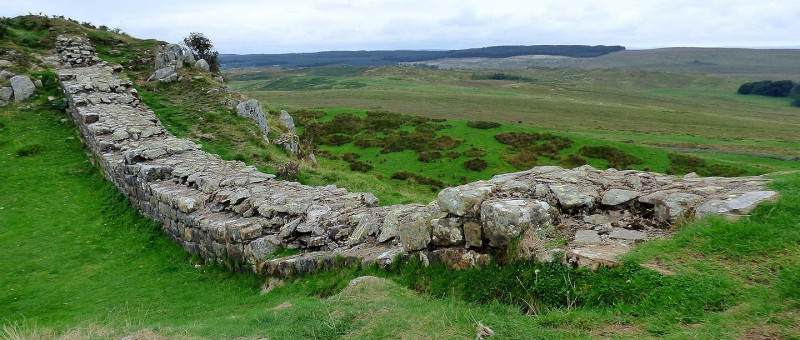
  • The Wall at Sewingshields: From Sewingshields Farm, the route of Hadrian’s Wall gradually climbs westwards for ¾ mile (1.2km) to higher ground, reaching a summit of 325 metres on Sewingshields Crags. It follows and exploits the natural defence formed by the Great Whin Sill. The route of the Wall is clear for most of this distance, and west of Sewingshields Farm several lengths of the Wall have been excavated and conserved.
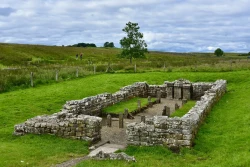
  • Sewingshields Milecastle: Milecastles, built about 1 Roman mile (1.48km) apart along the Wall, usually incorporated gateways that allowed access into and out of the Roman province of Britannia. Sewingshields Milecastle, unusually, does not have a north gate through the frontier, presumably because the 30-metre high crags immediately outside made one impractical. It is just possible that there was an entrance here which was later removed, but no trace remained when the site was excavated.
  • Milecastles: Milecastles were part of the original design for Hadrian’s Wall before a major change of plan – to incorporate large forts on the Wall – was made part way through its construction.
  • The milecastle’s development: Excavations at milecastle 35 in the 1970s uncovered a complicated sequence of building and rebuilding inside the milecastle over more than 250 years.
  • Life at the milecastle: Many small objects recovered during excavations provide glimpses of everyday life at the milecastle. These include pottery sherds from fine and coarse vessels, parts of six stone hand-mills for grinding cereals into flour, a reaping hook, a key, whetstones, and fragments of glass from bottles, drinking vessels and about 15 fragments of window glass. The latter, dated to the 2nd century, reveals the amount of care taken to make the building’s interior comfortable.
  • Medieval settlement: Over 850 years later, the site was re-occupied by a settlement that flourished from the mid 13th to early 15th centuries. By this time, erosion and stone robbing had reduced the milecastle walls to tumbled mounds. Three medieval buildings, added at different times, were discovered here during excavation. They were probably outliers of the medieval manor of Sewingshields, which included a fortified tower house about 800 metres to the east.
  • The turrets of Hadrian’s Wall: In the original design for Hadrian’s Wall, about 160 turrets were built two to every Roman mile along it. They provided lookout positions for small groups of soldiers to monitor people’s movements north of the Wall, and shelter and basic facilities for the men on duty. Two turrets were positioned between each pair of milecastles, which probably provided the troops for duty at the turrets.
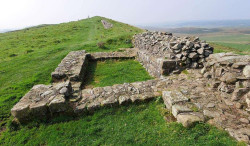
  • Sewingshields Turret (35a): Turret 35a’s dramatic location on Sewingshields Crags, close to the edge of the Great Whin Sill, was a perfect platform for observing a wide tract of territory to the north.
  • Grindon Turret (34a): Turret 34a can be seen 250 metres east of the farm buildings at Sewing Shields, on a low ridge overlooking the wet upland area of Fozy Moss to the north. Its short wing walls demonstrate its construction before the main Wall joined it.

Facilities

  • Parking: Charged car parking is available at the Northumberland National Park car park at Housesteads Roman Fort, just over a mile away.
  • Food & Drinks: Housesteads has toilet facilities and a shop selling food and drink.

Price

Price: Free

Birthday Parties

Offer Birthday Parties: No

Open any reasonable time during daylight hours.

Address: Haydon Bridge, Hexham, Northumberland NE47 6NW, UK

Post Code: NE47 6NW

Council: Northumberland

County: Northumberland

  • Road Access: North of B6318; 1 1⁄2 miles east of Housesteads Roman Fort.
  • Bicycle Access: Find this site on The National Cycle Network.
  • Parking: Charged car parking is available at the Northumberland National Park car park at Housesteads Roman Fort, just over a mile away.

0

0 Reviews

Rating breakdown

5
80% Complete (danger)
0
4
80% Complete (danger)
0
3
80% Complete (danger)
0
2
80% Complete (danger)
0
1
80% Complete (danger)
0

Get the best blog stories into your inbox!